

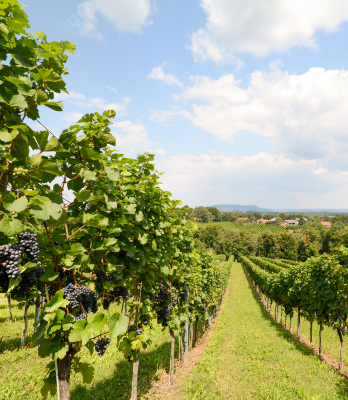
Vineyard – Green Area
The Green Area addresses all practices related to vineyard management, from planning and the efficient use of resources to pest control, soil management, biodiversity, and field working conditions. This area integrates an environmental and operational approach that seeks to ensure responsible, safe, and sustainable agricultural production.
It includes chapters on vineyard planning, irrigation, nutrition, soil management, pest control, biodiversity, agrochemicals, waste, machinery, agricultural infrastructure, and working conditions in the vineyard.
This area is divided into two sections, each with its own chapters.
 Would you like to learn about the sustainability requirements for vineyards? Download the standard and review the criteria applicable to this area.
Pre-Planting Vineyard Management Section

It promotes a vineyard design adapted to soil and climate conditions, one that optimizes irrigation and takes into account the conservation and restoration of the environment.
Assess the physical, chemical, and sanitary conditions of the soil to guide its management, prevent erosion, and promote proper vineyard establishment.
It promotes the selection of plant material of known origin and identity, with phytosanitary certification, and adapted to local soil and climate conditions.
Established Vineyard Management Section
It considers practices aimed at preventing and reducing emissions that may affect air quality and the environment.

It promotes the identification, protection, and conservation of biodiversity in the field, supporting natural habitats and their integration with viticultural activities.
It evaluates energy efficiency in the vineyard by measuring energy use and implementing energy-saving measures that help reduce consumption and its environmental impact.

It promotes planned vineyard management based on up-to-date information about the vineyard, its characteristics, area, infrastructure, and main production activities.

It provides guidance on the responsible and efficient use of plant protection products and fertilizers, taking into account their proper selection, preparation, and application.
It promotes the prevention, monitoring, and integrated management of pests and diseases, favoring control methods that reduce risks to people and the environment.
It aims to achieve balanced vineyard nutrition based on analysis and planning, optimizing fertilizer use and reducing potential environmental impacts.
It seeks to maintain safe and healthy working conditions by identifying and preventing risks and protecting those who work in the vineyard.
It promotes practices that help restore and maintain soil health, supporting the soil's natural functions and the sustainability of the vineyard.
It promotes practices that protect and improve soil conditions, preventing erosion, compaction, and other processes that may affect soil quality and productivity.
It establishes conditions for the safe storage of these products, reducing risks to people and preventing environmental impacts.
It promotes the efficient and responsible use of water through planning, measurement, and monitoring, incorporating practices that help reduce water consumption.

It strengthens the knowledge and skills of those who work in the vineyard, promoting sustainable practices, workplace safety, and an appropriate response to emergencies.
It aims to maintain an appropriate balance between the plant's growth, its yield, and the desired characteristics of the grapes.
It addresses the prevention, reduction, reuse, recycling, and proper disposal of waste generated by vineyard activities.
Consider a planned approach to weed management, based on weed identification and monitoring, as well as control methods tailored to the vineyard's conditions.